Top things to know about charging an EV at home
Top things to know about charging an EV at home

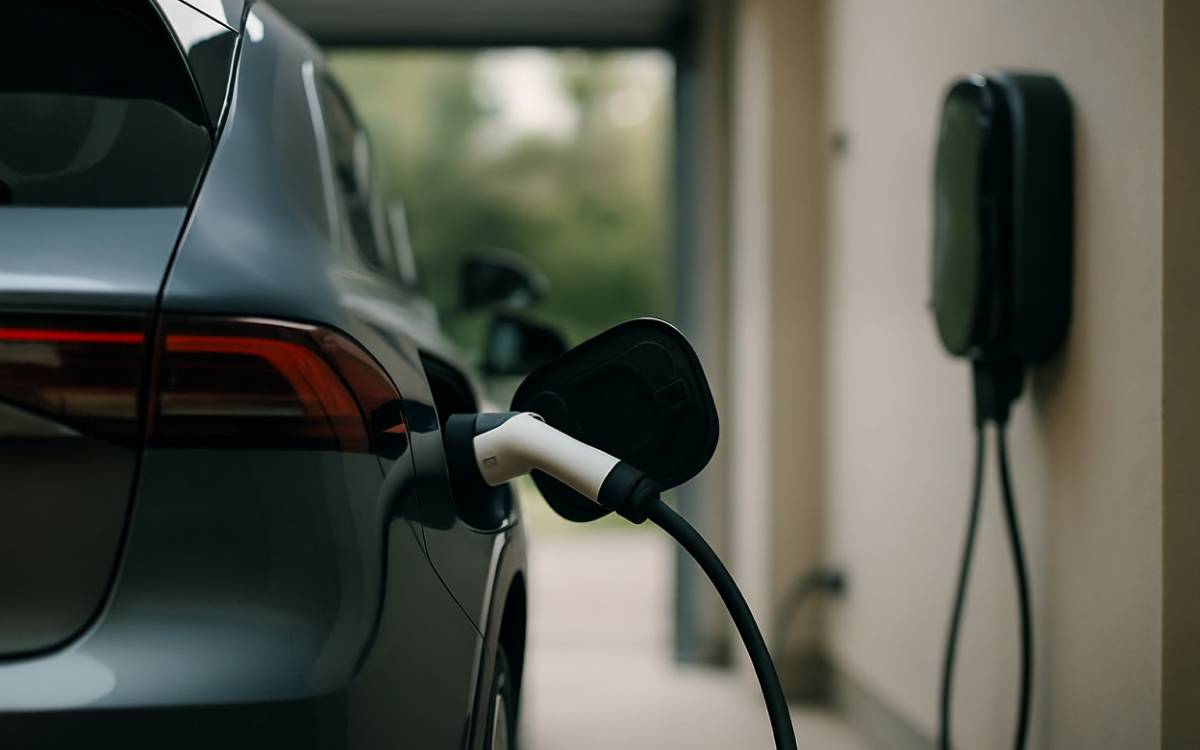
A charging station can be right in the driveway or garage for electric vehicle owners. This is because they can conveniently charge their cars overnight right at home. Additionally, home charging is generally more affordable per mile than gas, especially when owners consider using typical residential electricity rates. So, instead of heading to a nearby charging station, electric car owners can easily recharge their vehicles at home overnight.

Levels of home charging

Home EV charging is generally available in two main levels, each designed for different needs. Level 1 charging uses a standard 120-volt household outlet, which is similar to plugging in a toaster or vacuum. It adds just a few miles of range per hour of charging. Car owners who have plug-in hybrids or those who need to cover low daily mileage may find this option useful for overnight charging.

Level 2 charging, on the other hand, uses a 240-volt circuit, similar to the one for a clothes dryer or a dedicated hard-wired unit. This setup is often used to deliver a faster charge. This means that about 12 to 40 miles of range per hour can easily be added to the car’s charge, depending on the power of the charger and the car’s onboard system. A licensed electrician is usually hired to install the system. Besides that, car owners need to ensure that the installation process complies with local codes and that everything meets safety standards.

Step-by-step home EV charger installation

Most home EV chargers can be set up with a few basic steps. Some manufacturers might need additional equipment and tools.

Assess electrical capacity

A licensed electrician can be hired to inspect the home’s electrical panel. They can confirm if there is enough capacity and available amperage for a Level 2 charger, typically in the 40–50 amp range.

Choose the location

Car owners can consider a spot, such as a garage wall or an outdoor post, near the EV’s usual parking area. They should ensure that the charger is wall-mounted or pedestal-style. If they choose to install it outdoors, they must weatherproof it with a cable long enough (20–25 feet) to reach the car’s port easily.

Select and purchase equipment

There are several available from top brands, such as ChargePoint’s Home Flex, which offers up to 50 amps of charging capacity and is Wi-Fi/app-enabled. It costs around $700–900 for a 23-foot cable. Another top provider is Wallbox Pulsar Plus with 40 amps and smart features. Its price is about $600–800 for a 25-foot cable. Meanwhile, brands like  JuiceBox 40 have 40 amps with scheduling/voice integration. Its price is about $650–850. For affordable options, there are providers like the Grizzl-E Classic with 40 amps, priced around $400–600.

Obtain permits

A car owner must check the local building codes, as many areas need a permit for electrical work. The electrician can handle this to meet safety standards.

Install the charger

A dedicated wiring should be run from the panel to the location. Then, the unit can be mounted and connected securely. It is recommended to test the circuit with breakers and, if needed, protective devices such as GFCI.

Test and activate

Finally, plug in the EV and run a full charge cycle. The app connected to the car can be used to check the operation, scheduling, and energy monitoring.

What home charging really costs

With home EV charging, daily costs can be easily estimated and kept lower than those for conventional fuel. In most cases, charging timing plays an important role in how much a car owner can save. Many chargers and EV apps allow scheduling for overnight sessions during off-peak utility rates. This helps further lower the electric bill. Also, there are smart chargers that display the energy use and estimated costs. Some of these can be seamlessly integrated with utilities’ time-of-use plans.

Popular Reads

Top 6 sedans to buy in 2026 and their features

Top 6 sedans to buy in 2026 and their features

Sedans are suitable for various purposes, such as daily commutes, longer drives, and weekend getaways, and are quite comfortable and efficient. That said, for those planning to buy a sedan, there are plenty of choices to consider, from midsize hybrids and electric options to luxury picks. To make the right choice, individuals must consider their budget and lifestyle. It also helps to understand factors such as price, MPG ratings, tech features, and everyday usability. Toyota Camry Hybrid The Toyota Camry Hybrid has a base price of around $29,000. It comes with a standard all-hybrid powertrain. The car delivers 50 MPG in the city, which helps save on fuel costs, especially for those looking for a decent everyday commuter car. Some of the key features of this mid-sized sedan include the Toyota Safety Sense 3.0 suite for collision avoidance and lane-keeping assist, a 12.3-inch touchscreen for navigation and entertainment, and a quiet cabin for reduced road noise. The Camry is family-friendly, too, with spacious rear seats and convenient wireless device charging. Honda Accord Hybrid With a starting price of about $30,000, the Honda Accord Hybrid is a budget-friendly and reliable sedan. The car’s combined fuel economy of 48 MPG makes it suitable to be taken on longer trips without making frequent stops for refueling.
6 popular electric bikes to check out in 2026

6 popular electric bikes to check out in 2026

Electric bikes have gained popularity over the years. Many people are opting for affordable e-bikes for easier, sweat-free commuting, which also helps them save money on transport while minimizing their carbon footprint. They are often used to replace cars for short errands and quick trips, among other purposes. Additionally, they allow users to enjoy the outdoors while decreasing their environmental impact compared to traditional vehicles. There are cost-effective options available for those looking for long-range electric bikes. Aventon Level 3 The Aventon Level 3 checks multiple boxes, including a commuter-centric design, intuitive software, and strong performance from its 720Wh battery, making it one of the best affordable e-bikes to own. Its everyday usability is boosted by practical features, such as integrated lights, turn signals, fenders, and an app-connected electronic lock system. Moreover, the bike’s hybrid styling provides riders with a supportive, upright position while riding the Level 3 for commuting to work or running errands.  Lectric XP4 750 Where the Aventon impressed with its long features and overall sophistication, the Lectric XP4 750 stands out with its 36.7-mile range, easy folding mechanism, rapid pace, and, most importantly, its affordable price point. This bike’s folding frame makes it ideal for small apartment storage spaces and car trunks.
How to find dealerships for 2026 RAM

How to find dealerships for 2026 RAM

When buying a new vehicle, finding the right dealership is just as important as selecting the right brand and model. Fortunately, when buying a 2026 RAM truck, one can at least be confident that they are choosing a reliable and well-established model. Then, the next step is to make sure the dealership matches the same level of trust and quality. A little research and the right approach can go a long way in ensuring this. Visit the RAM website One of the simplest ways to find authorized RAM truck dealers in the country is to visit the official RAM website. On the homepage, there is a tab in the top menu labeled “Find A Dealer.” When one visits this webpage, they should enable location access to easily find nearby dealers. However, if that does not work, or if one wants to find a dealer in a different location, the same page allows manual searches by region name or PIN code. The tool also displays dealership addresses, contact numbers, and directions, which helps narrow down suitable options. Use online resources One can always directly look up dealers on the search engine. They can simply search for “2026 RAM dealerships near me,” to access multiple options within seconds.