Common IUD side effects and how to tackle them
Common IUD side effects and how to tackle them

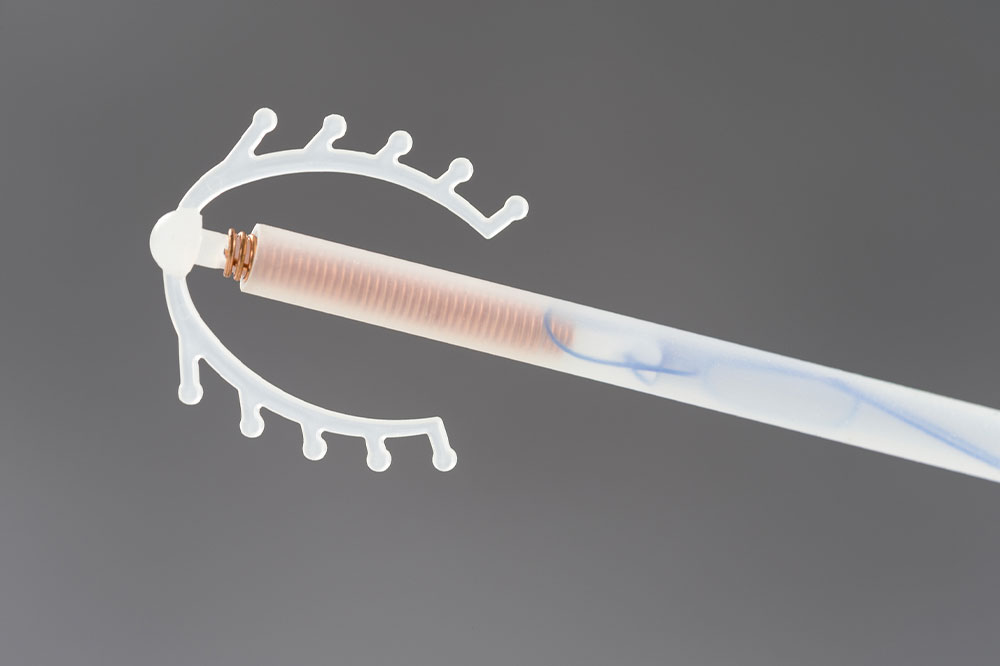
Intrauterine devices (IUDs) are a popular form of birth control. Shaped like a “T,” they are inserted towards the top of a woman’s uterus to prevent sperm from reaching and fertilizing the egg. There are two forms of IUDs: hormonal and non-hormonal. Both have different side effects on different people, and users often experience them in the first few weeks of insertion. But the good news is that the side effects can be managed.

What are the side effects of IUDs?
The most common side effects are irregular bleeding for a few months, pain, cramping, dizziness, and lighter/shorter periods or no periods at all. Women may also experience premenstrual syndrome (PMS) with symptoms like headaches, nausea, breast tenderness, or skin blemishes. Other rarer side effects include cysts on the ovary and infections due to bacteria entering the cervix or uterus.

Sometimes, IUDs can shift or get displaced in the uterus, increasing the risk of embedment (or when the device attaches to the wall of the uterus), perforation (when the IUD goes through the wall of the uterus), migration (when the IUD moves to a different location in the uterus), and expulsion (when the IUD moves out of the uterus).

How to tackle the side effects?
Here are some tips on what one can do before, during, and after IUD insertion to manage side effects better:

Before the appointment
Doctors may recommend pain-reducing treatments for those worried about the pain. This is in addition to a treatment to soften the cervix an hour before the procedure. Women heading to get an IUD are also suggested to wear comfortable clothes and carry essentials like a heating pad, a panty liner or sanitary napkin, and some juice to fight any dizziness.

During the procedure
It is recommended to stay as calm as possible during the procedure, so meditation and breathing exercises may help. If requested, some doctors administer laughing gas or another pain-reducing treatment during the procedure to minimize pain further.

After insertion
Many women experience bleeding after insertion, so the sanitary napkins or panty liners brought along come in handy. The type of IUD used also determines the side effects. For instance, hormonal IUDs can lighten periods over time and help reduce cramping. On the other hand, non-hormonal IUDs may cause heavier periods and increase cramping. Since heat helps relieve cramping, one may use a heating pad after the procedure. Drinking rosehip tea can also help.

As with all menstruation-related symptoms, the IUD side effects differ from person to person. Those experiencing PMS symptoms should get sufficient rest and practice deep breathing exercises to relieve headaches and other discomforts.

It may take six to eight months for the body to adjust to an IUD fully. Besides following these tips to tackle IUD side effects, one should consult a physician if they experience fever, severe pain or cramping, bleeding during or after intercourse, unusual vaginal discharge, pregnancy symptoms, or difficulty breathing. It is also advisable to contact a doctor if one can no longer feel the strings of their IUD to ensure it has not moved.

Popular Reads

4 Small Pickup Trucks to Choose From

4 Small Pickup Trucks to Choose From

Small pickup trucks were once primarily used for hauling farming or construction equipment. Today, these vehicles also offer massive cargo space, extravagant passenger features, and rugged capabilities. And if you’re looking for such a vehicle, the number of options and price ranges can overwhelm you. To help filter your requirements is the first step to take. To shortlist your choices, here are our top four pickup trucks that truly give you bang for the buck. 2013 Toyota Tacoma The 2013 Toyota Tacoma is still a very popular truck for the regular pickup driver. It comes in different trim variants and is loaded with a variety of features. Moreover, it gives you an impressive cargo capacity for its size, making it one of the best pickup trucks. Depending on your needs you can either choose a 2.7-liter four-cylinder engine that gives 159 hp or go for a higher 4.0-liter V6 engine that produces 236 hp. It’s available in both five-speed manual transmission or four-speed automatic transmission. You can even opt for a four-wheel-drive in case you offroad a lot. 2016 Chevrolet Colorado The 2016 Chevrolet Colorado is a comfortable ride with spacious and exquisite interiors. It is a compact truck that can be easily driven in the city while offering the capabilities of a full-size truck.
5 affordable crossover SUVs you can buy without thinking twice

5 affordable crossover SUVs you can buy without thinking twice

Crossover SUVs offer tons of versatility in functionality at practically very affordable prices. Suitable for cargo as well as passenger transportation, crossover SUVs provide the best of both worlds. In addition to being a perfect combination of a passenger car’s fuel economy and a small truck’s cargo capacity, crossover SUVs prices are more pocket-friendly. Crossover SUVs bring in the sturdiness of a pickup truck, spacious cargo hold of hatchbacks, and passenger comfort of a minivan or a wagon. No wonder crossover SUVs have quickly become popular. If you are planning to buy one, here are some popular ones at affordable crossover SUVs prices. Hyundai Kona: With prices starting from $20,100, the Hyundai Kona has one of the most affordable crossover SUVs prices. At a budget price, this crossover SUV is replete with outstanding and significantly good features. These include a stylishly quality cabin with a user-friendly infotainment system, good crash test ratings, and agile handling. At such an affordable price tag, this crossover SUV is a catch. Kia Sportage: The Kia Sportage can easily accommodate five passengers within its spacious cabin. With a price starting from $23,990, the Kia Sportage is a compact crossover SUV that gives decent performance powered by an efficient four-cylinder engine.
What to consider before buying a Chevy Silverado 1500

What to consider before buying a Chevy Silverado 1500

Chevrolet has been a household name in the automobile industry for over a hundred years now. The auto giant earned a reputation for manufacturing some of the best pickup trucks in recent years and the Silverado series is one stellar example. The Chevrolet Silverado 1500 is by far the strongest and technologically advanced pickup designed to get the job done, period! A bigger engine, better transmission, and stellar off-road capabilities rank the 1500 trims in a class of its own. Here are some of the key highlights of the pickup truck. Trims The Chevy Silverado 1500 is a true commercial workhorse that offers eight trim variants and three custom special editions. The heavier V8 engine trims can haul heavy loads for long distances, while the lighter Turbo trims offer the best fuel economy in its class. Towing and trailering also play an important role when it comes to choosing a trim variant. Engine and transmission The bigger the engine block, the more powerful is the pickup. You get multiple options for engines, including your standard V6 or V8 and the more fuel-efficient Duramax® Turbo-Diesel. The Silverado 1500 comes with a 4.3L V6, 5.3L V8, or a 6.2L V8, all great engine blocks for the heavy trims.